Diplomatic reprimand of Nigeria’s high commissioner a 'closed matter': South Africa
Editor:
Tuğçe Nur Kaya


Pretoria summoned Nigeria’s High Commissioner, Femi Fani-Kayode, following controversy stemming from an official ceremony hosted by President Cyril Ramaphosa.
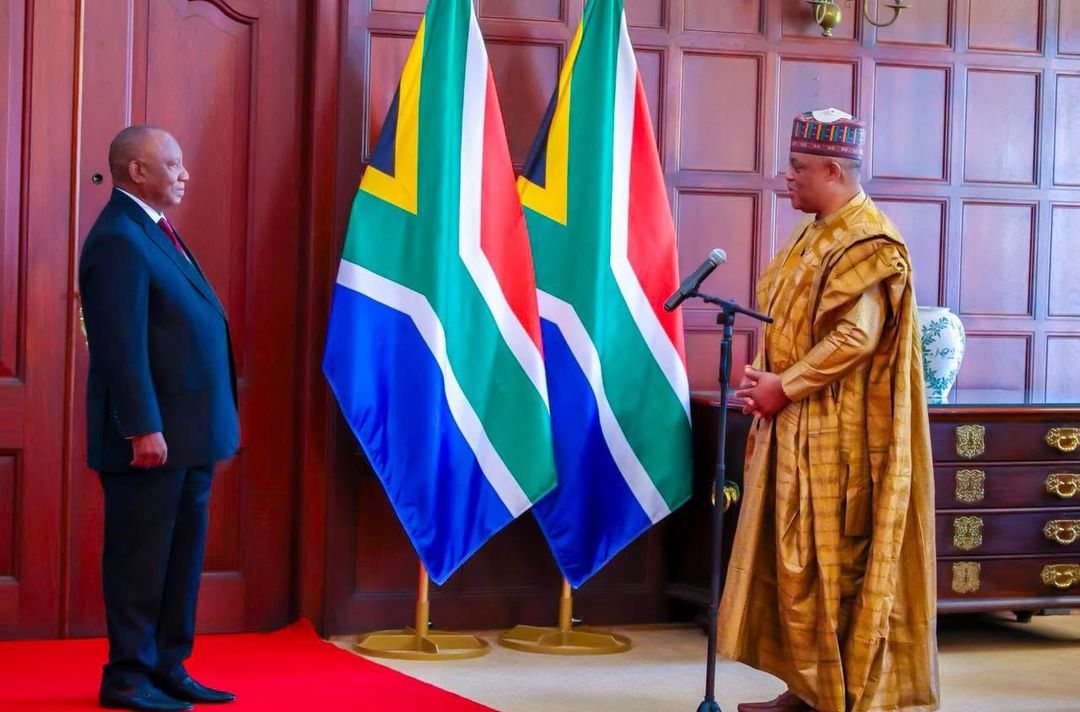
South Africa's International Relations and Cooperation Minister Ronald Lamola says he considers the diplomatic reprimand of Nigeria’s High Commissioner, Femi Fani-Kayode, a closed matter, but says South Africa will continue to monitor the situation, state broadcaster SABC reports.matter but
Pretoria summoned Nigeria’s High Commissioner, Femi Fani-Kayode, following controversy stemming from an official ceremony hosted by President Cyril Ramaphosa for new ambassadors to present their credentials.
On 17 November 2026, Fani-Kayode met with South Africa’s Director-General of International Relations and Cooperation, Zane Dangor, who conveyed the government’s concerns over his social media posts on the ceremony hosted by Ramaphosa.
During the meeting, Dangor reminded him of the Vienna Convention on Diplomatic Relations, which requires diplomats to handle official matters through established diplomatic channels.
‘Cordial meeting’
Fani-Kayode subsequently described the meeting as “cordial and constructive”, saying both countries remained committed to strengthening their longstanding relationship.
But what exactly happened to cause tensions between two of Africa’s most influential countries?
The row began on Friday, 13 November, when Ramaphosa received the credentials of 15 newly appointed ambassadors and high commissioners in Pretoria.
Fani-Kayode, Nigeria’s first officially appointed High Commissioner to South Africa in nearly four years, accused the South African Presidency of deliberately excluding his introduction and speech from the official livestream of the event.
He questioned why the presentations of the other 14 diplomats were broadcast while his was not.
Fani-Kayode was the last to make his presentation and South African officials said the livestream was affected by technical issues.
No ‘deliberate censorship’
The South African Presidency also rejected his claims of deliberate censorship.
Presidential spokesperson Vincent Magwenya said Ramaphosa had no authority to interfere with the editorial decisions of public broadcaster SABC.
The broadcaster also clarified that its coverage was separate from the Presidency’s livestream arrangements.
The Presidency later uploaded a full video of the ceremony on YouTube.
But the incident sparked debate and further reignited recurring tensions between the two countries.
Illegal migration
In June and July 2026, mass protests against foreign nationals and businesses in South Africa prompted Nigeria to organise the voluntary repatriation of nearly 1,500 citizens.
Several other African countries took similar measures in the wake of the anti-immigrant unrest.
Despite the tensions, Nigeria and South Africa, two of Africa’s biggest economies, share deep historical ties.
Nigeria strongly supported South Africa’s struggle against apartheid rule, providing financial and diplomatic assistance to the liberation movement.
Since the end of apartheid in 1994, both countries have developed significant political and economic ties, with Nigeria being South Africa’s biggest trading partner in Africa, despite periodic disagreements.
For now, both governments have reaffirmed their commitment to mutual respect and stronger bilateral relations.
TRT Afrika and agencies — TRT Afrika and agencies
Photo: Facebeook





Putin tells APEC business leaders economic coercion is 'a thing of the past,' meets Xi
The Russian president calls for 'dialogue rather than ultimatums' at the Asia-Pacific Economic Cooperation forum ahead of Thursday's summit with Xi and Trump.
Democrat Mary Peltola wins in Alaska, securing 56-44 US Senate majority
Peltola flips US Senate seat in Alaska after a tight race, unseating Republican incumbent Dan Sullivan, according to official ballot count.
China's Xi opens APEC summit in Shenzhen with call for greater international cooperation on AI
President Xi Jinping Xi formally opens Asia-Pacific Economic Cooperation meeting in the southern Chinese city, where he is scheduled to meet US President Trump and Russian leader Putin.



All rights reserved. Newstimetr © 2026