Africa's Critical Minerals Are Redefining Global Power as the Race for Green Energy Accelerates
Editor:
Halimatou HAMADOU DJIBO


Africa is rapidly becoming the focal point of a new global competition—not for oil, but for the critical minerals powering electric vehicles, artificial intelligence, renewable energy and advanced defense technologies.
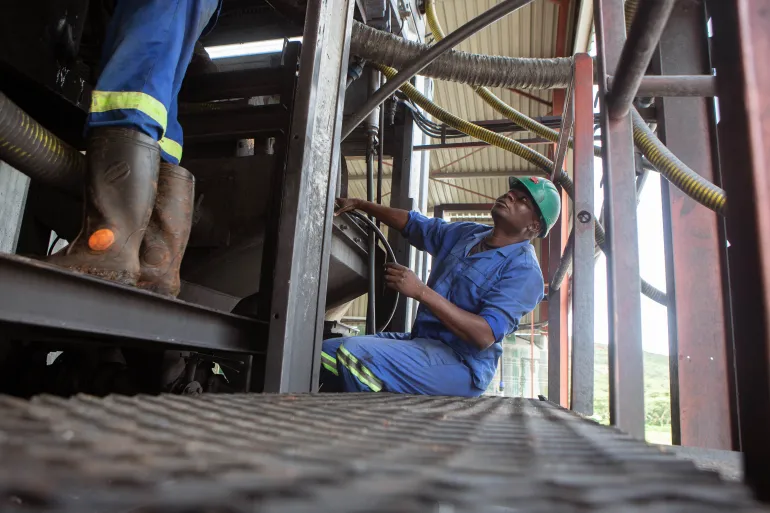
For decades, Africa's mineral wealth has largely benefited foreign companies while many producing countries struggled to convert natural resources into broad economic development. Today, however, the global transition toward clean energy is creating a historic opportunity for African nations to reshape that relationship.
The Democratic Republic of Congo supplies the majority of the world's cobalt, while countries including South Africa, Zimbabwe, Namibia, Zambia, Ghana and Mali possess significant reserves of lithium, manganese, graphite, copper and rare earth elements. These minerals have become indispensable for batteries, semiconductors, wind turbines, military equipment and artificial intelligence infrastructure.
As demand continues to surge, governments from Washington and Brussels to Beijing and New Delhi are competing to secure long-term supply agreements, placing Africa at the center of an emerging geopolitical contest.
African leaders increasingly argue that simply exporting raw minerals is no longer enough.
Instead, governments are introducing policies designed to encourage domestic refining, battery manufacturing and higher-value industrial production before minerals leave the continent.
Namibia has restricted exports of several unprocessed critical minerals, while Mali is investing in gold refining capacity. Ghana has also announced measures aimed at increasing domestic participation in its mineral value chain rather than relying solely on exports of raw materials. These policies reflect a broader continental effort to capture more economic value from Africa's natural resources.
Economists believe this shift could fundamentally change Africa's industrial future if supported by infrastructure investment, skilled labor and reliable energy supplies.
The race for critical minerals extends far beyond mining.
China currently dominates much of the world's mineral processing industry, while the United States and the European Union are investing heavily to diversify supply chains following concerns over strategic dependence.
Rather than competing only for access to mines, major economies are increasingly offering investment packages, infrastructure financing and industrial partnerships designed to strengthen long-term relationships with African governments.
For African policymakers, this competition provides greater negotiating power than in previous commodity booms.
One of the continent's biggest challenges has historically been the export of raw materials followed by the import of expensive finished products.
African governments now hope to reverse this model.
Instead of shipping cobalt, lithium or copper abroad for processing, several countries are encouraging investment in local refineries, battery component factories and industrial parks.
Supporters argue that domestic processing would create skilled employment, increase tax revenues and reduce dependence on volatile commodity prices.
The objective is no longer simply extracting minerals—but becoming an indispensable part of global manufacturing.
Despite enormous geological potential, infrastructure continues to limit industrial expansion.
Reliable electricity, railways, ports and modern logistics networks remain insufficient in many mining regions.
Large-scale industrial development will require billions of dollars in investment not only in mines but also in transport corridors, renewable energy projects and digital infrastructure.
Development banks and international financial institutions increasingly view these investments as essential if Africa is to compete in global manufacturing rather than remain primarily a supplier of raw materials.
The rapid expansion of mining has also intensified debate over environmental protection and labor standards.
Communities living near mining operations continue raising concerns regarding water use, land rights and environmental degradation.
International buyers are simultaneously demanding greater transparency throughout mineral supply chains, particularly regarding child labor, workplace safety and sustainability.
Meeting these standards has become increasingly important as manufacturers seek ethically sourced materials for electric vehicles, renewable energy technologies and consumer electronics.
Analysts argue that strong governance could become as valuable as mineral reserves themselves.
African governments are also placing greater emphasis on regional cooperation.
Rather than competing individually for foreign investment, policymakers are exploring ways to coordinate industrial policies, infrastructure planning and trade integration.
Regional organizations have highlighted critical minerals as a strategic opportunity capable of supporting broader industrialization across the continent. Several initiatives now encourage cross-border cooperation in processing, manufacturing and supply chain development.
Such collaboration could reduce duplication while creating larger integrated markets attractive to international investors.
Unlike previous commodity cycles, African governments today possess greater leverage.
Global demand for critical minerals is expected to remain strong for decades as countries pursue decarbonization strategies and digital transformation.
This sustained demand provides producing nations with increased bargaining power when negotiating investment agreements.
Rather than accepting traditional extraction contracts, governments are seeking commitments involving technology transfer, workforce training, infrastructure development and local manufacturing.
Many observers see this as one of the continent's strongest opportunities to reshape its economic trajectory since independence.
Whether Africa ultimately benefits from the critical minerals boom will depend less on geology than on governance.
Transparent institutions, stable regulations, environmental protection and long-term industrial planning will determine whether resource wealth generates broad-based prosperity or repeats familiar patterns of dependency.
The continent possesses nearly one-third of the world's known reserves of several strategic minerals, placing it at the center of the global energy transition.
For investors, governments and manufacturers alike, the message is increasingly clear: the future of electric vehicles, advanced computing and renewable energy will depend not only on technological innovation but also on decisions being made today across Africa.





Netanyahu faces another fine over election propaganda filmed at military base
The Israeli prime minister is ordered to pay a fine after Israel's election commission ruled footage filmed at an air base amounted to election propaganda.
Türkiye offers condolences to Nigeria over military aircraft crash
Nigerian President Bola Tinubu declared three days of mourning on Tuesday.
One last masterclass as Messi bids Argentina adieu in tears after dazzling final display
Messi bids an emotional farewell with a goal and two assists in Argentina's 3-0 win over Benin, his 126th international goal crowning his 208th and final appearance.




All rights reserved. Newstimetr © 2026